
Setting Up DSR Handling Type
Choose how each data source fulfills a request — automatically, manually, or by assigning a coworker.
When you build a right's workflow, each data source needs an action that tells MineOS how requests for it are fulfilled. This action — the handling type — is set under each data source in the Action for fulfilling requests section.
Where the handling type applies
The handling type is chosen per system's instance, so different data sources within the same right's workflow can be handled in different ways — one source confirmed manually, another assigned to a coworker, another handled by an integration. For a single system you can create multiple instances, where each instance has a different handling type.
The three handling types
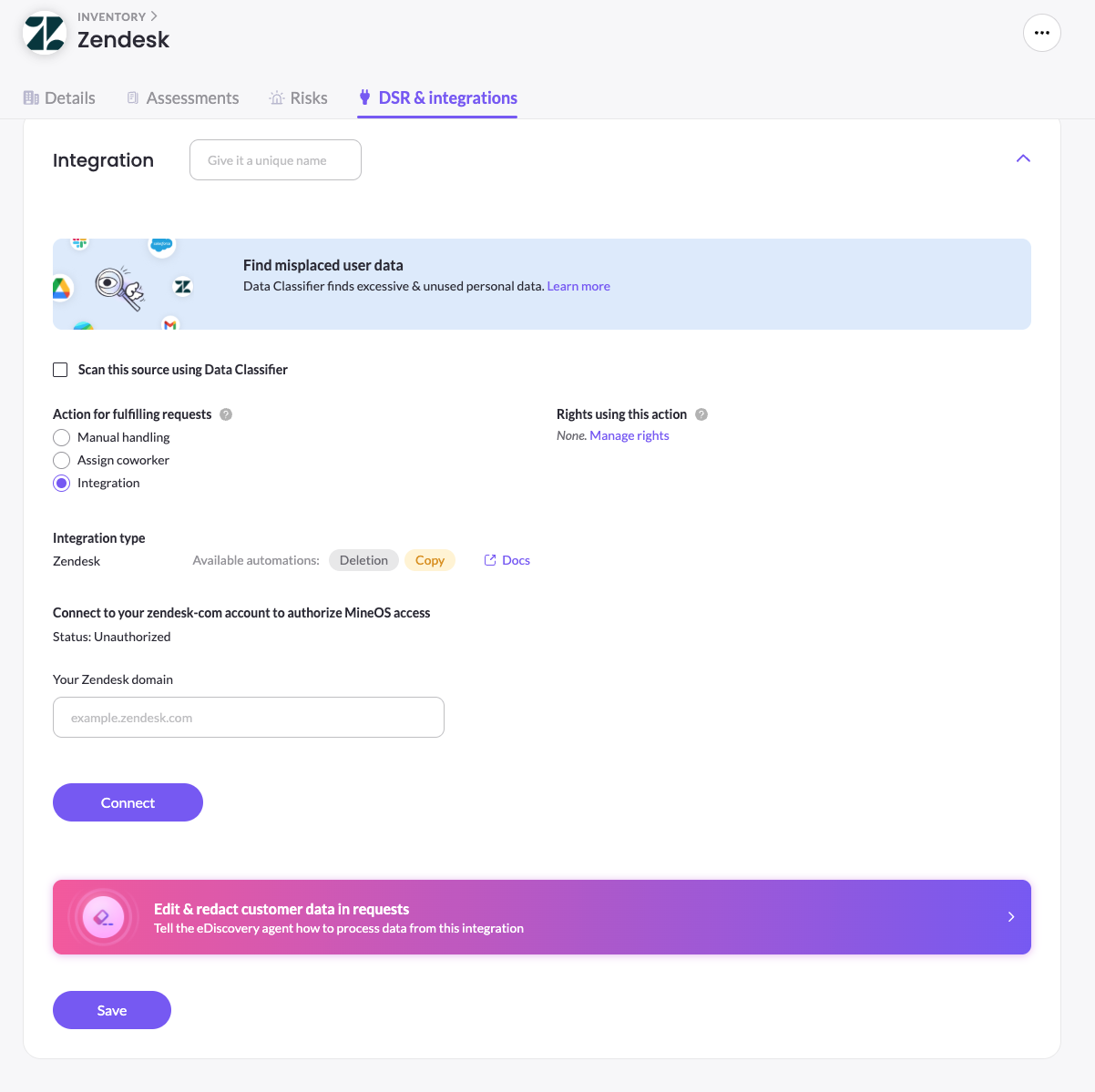
#1 - Automatic integration
Automatic handling connects MineOS directly to the system via an integration, so requests are fulfilled without any manual steps. When a deletion or copy request comes in, MineOS executes the required action in the system on your behalf — no one needs to log in, no task needs to be forwarded. This is the most efficient option for systems that hold large volumes of personal data or see frequent requests.
Integrations are available for a growing list of systems and may use OAuth, API keys, email, or queries depending on the system. If an integration isn't available yet for a system you need, please contact your CSM for additional information.
#2 - Manual handling
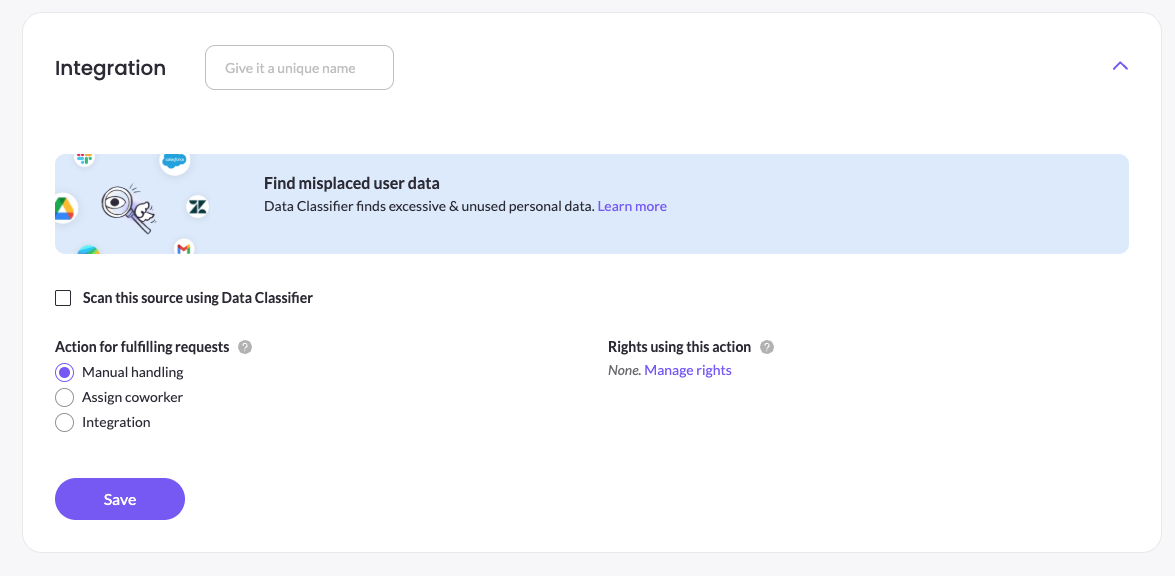
The data subject request involves this system, but MineOS leaves the actual fulfillment — locating and deleting the data, or collecting and sending a copy — entirely up to you. How this plays out depends on the type of request:
- Deletion requests: The system moves to the "Needs manual confirmation" section, waiting for you to act. Once you've deleted the data in the system yourself, you confirm it directly in MineOS ("Mark as completed") to move the system to the Completed section of the ticket.
- Copy requests: The system moves to the "Compile copy report" section of the ticket. You need to manually upload the relevant files to be included in the copy report (current limitation is max upload of 1,000 files, max file size is 30MB), and conduct any redaction needed by clicking on "Redact". One you click on "Compile report" MineOS proceeds to compile the copy report with the manual uploaded files of the manual integration.
#3 - Assign coworker handling
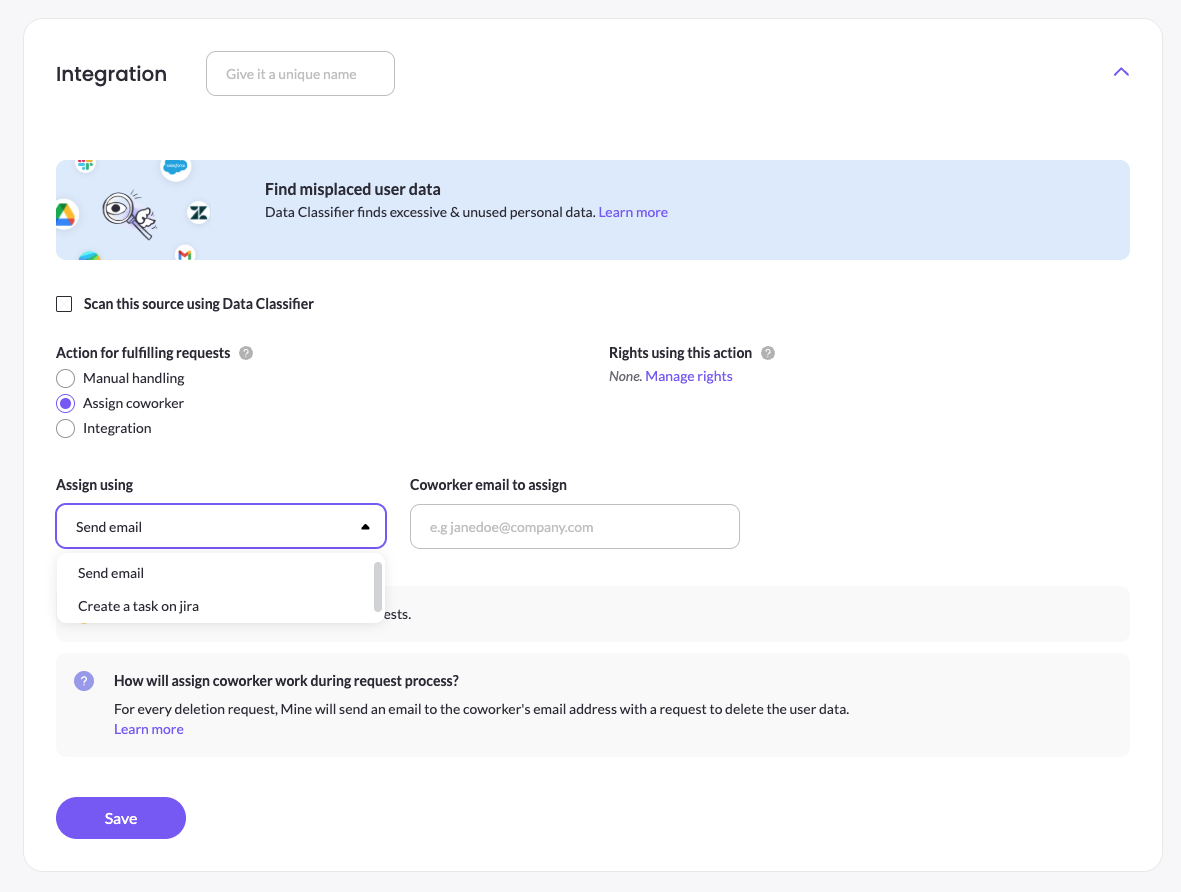
If a particular system falls under a colleague's responsibility — a CRM owned by Sales, for example — instead of sending emails yourself internally via your company's email, MineOS automatically contacts your co-worker so they can take action, and views this system as completed. MineOS does not wait for the co-worker's approval that the task was completed. You have two ways to do this:
- Send email — MineOS sends your co-worker an email notifying them of the task. They complete the action in the system themselves.
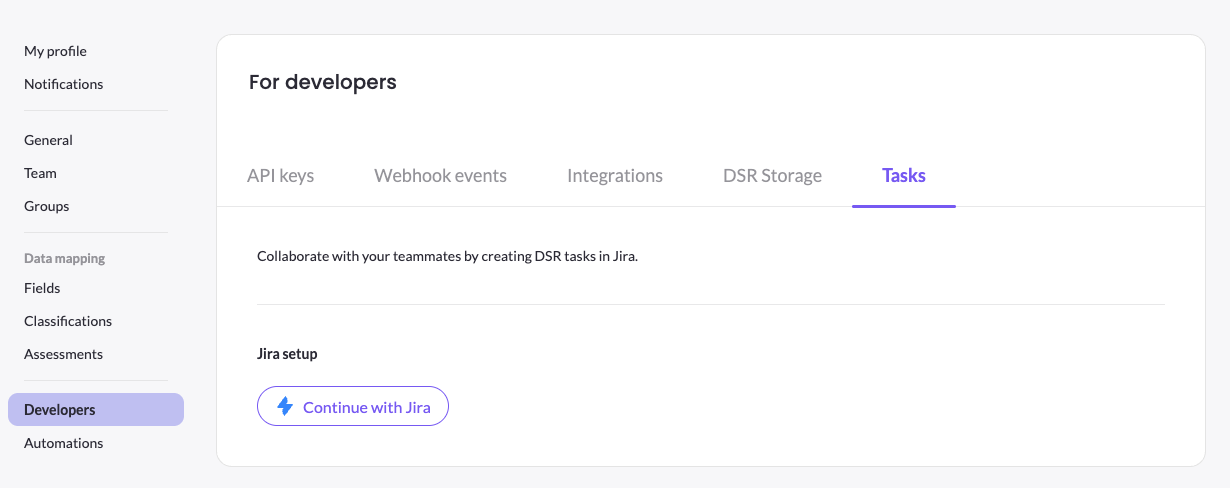
- Create a task on Jira — MineOS creates a Jira ticket and assigns it to your co-worker automatically. This is useful for teams that manage their work through Jira and want the request to flow directly into their existing queue. In order to enable the Jira assign co-worker, navigate to the main setting -> Developers tab -> Tasks -> click on Continue with Jira
Assign coworker is not group assignment
"Assign coworker" targets one individual coworker by email address. It is not the same as assigning a request to a team group — for team-based requests assignment, see Managing User Groups in DSR.
Updated 8 days ago